 Flickr
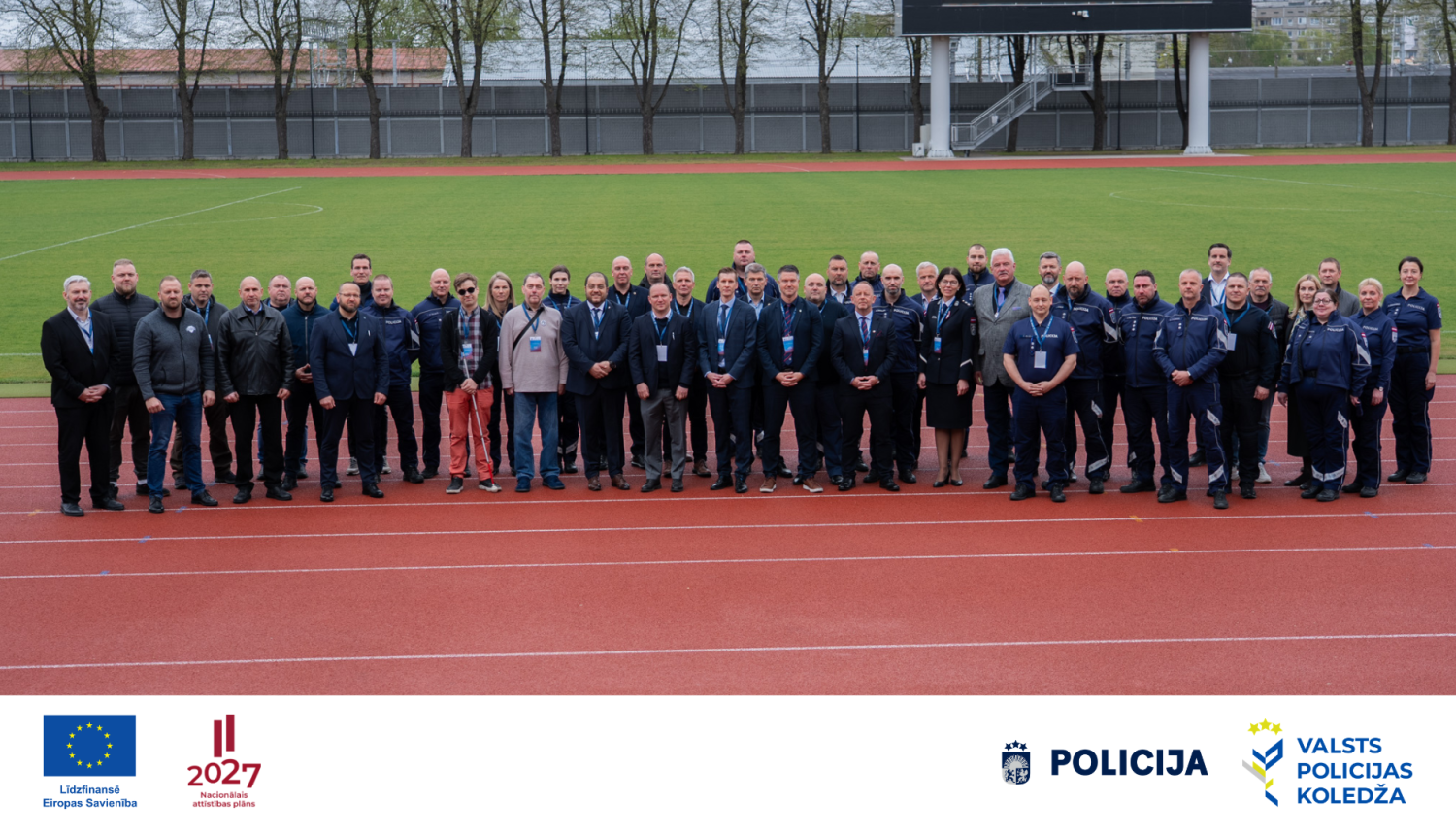
From 7 to 8 May 2026, an international conference entitled “Safety and Security at Sports Events: Police Response and Cooperation” was held in Riga at BTA Daugava Stadium. The event was organised by the State Police of Latvia and the State Police College. Over the course of two days, the conference brought together more than 200 participants, both in person and online, from six countries, including police officers, sports security experts, private security providers, public administration representatives, members of Association of people with disabilities and their friends “Apeirons”, medical professionals, and students from the Riga Medical College of the University of Latvia.
“Sport is full of emotions – some celebrate victory while others experience defeat. The primary task of the police and security services is to ensure that the only dramatic moments take place on the field, not in the stands or outside the venue. If police officers remain unnoticed during an event, that is the best compliment possible, because it means everything has proceeded smoothly. Few people realise that ensuring security at such events involves not only the police, but also international partners, football clubs, supporters, municipalities, and private security services,” said Arturs Smilga, Deputy Head of the Main Public Order Police Department and Head of the Resource and Crisis Management Department of the State Police of Latvia, while opening the conference.
During the first day of the conference, experts from the United Kingdom, Sweden, Lithuania, Estonia, Switzerland, and Latvia shared their experience on international police cooperation, the role of the National Football Information Points (NFIP) network, the approach of UEFA to safety and security, and the risk factors that may contribute to conflicts during sporting events.
Chad Houston, Head of the United Kingdom National Football Information Point, together with his colleague Roger Brown, presented current developments in football security. Swedish Police representative Daniel Hedman outlined NFIP practices at major sporting events, while Ruslans Zadorins from the Lithuanian Ministry of the Interior shared experience in international police cooperation. Raido Mitt, Deputy Secretary General for Sport at the Estonian Ministry of Culture, presented Estonia’s progress towards accession to the Saint-Denis Convention, which promotes an integrated European approach to safety, security, and service at football matches and other sports events.
Adrian Dinca, Senior Safety and Security Manager, Football Division / Safety and Security Operations at UEFA, presented UEFA’s approach to safety and security. “Sometimes the concept of ‘integration’ seems abstract – what does it actually mean? I explain it simply: it means cooperation. I experienced this while working in the police, and I continue to see it now at UEFA. International cooperation between different organisations strengthens security at football events, helps maintain public order, and contributes to a welcoming atmosphere across Europe. From UEFA’s perspective, we are currently working closely with the NFIP network and Europol in combating crime and match manipulation. UEFA is also investing considerable effort into strengthening cooperation between the public and private sectors,” Adrian Dinca emphasised.
The Latvian perspective on sports safety was presented by Edgars Pukinsks, Deputy State Secretary for Sport and Youth Affairs at the Ministry of Education and Science of Latvia, who also chaired and moderated the conference discussions. Contributions were also made by Aleksandrs Samoilovs, Head of the Sports Department at the Ministry of Education and Science of Latvia, Rolands Marcinkevičs, Deputy Commander of the Special Tasks Battalion of the State Police of Latvia, Andrejs Aronovs, Deputy Chief of the Riga Municipal Police, and Vilnis Veinbergs from Turība University.
Meanwhile, Vadims Ļašenko, President of the Latvian Football Federation, noted: “Football is the most popular sport not only in Latvia but globally, and safety remains one of its most important aspects. It is not merely an obligation, but also a responsibility towards athletes, referees, coaches, spectators, and society as a whole. Latvia will increasingly often host international sporting events, and their successful smooth running would be impossible without close cooperation with the State Police.”
To strengthen the ability of the institutions involved to identify risks in a timely manner, coordinate responses, and ensure effective cooperation during various incidents at sporting events, closed training exercises were held on the second day of the conference, May 8. During these exercises, participants moved from theoretical discussions to practical training by working through 13 different crisis scenarios in real-time simulations at BTA Daugava Stadium.
The simulations tested the operation of the security system in the stadium access area, including the ability of security staff to inspect and communicate with persons with mobility impairments who use wheelchairs, identify prohibited items during security checks, respond to aggressive fans, cooperate with officers of the State Police in situations where individuals attempt to conceal prohibited items, as well as manage uncontrolled crowd flows and attempts to bypass or force through security barriers.
Some of the scenarios also focused on incidents in the stands and the fan sector during the game. Participants worked through practical situations involving the provision of medical assistance to spectators experiencing health issues, responding to intoxicated individuals, de-escalating physical conflicts between fans, preventing the display of prohibited symbols, and enforcing smoking restrictions. In each scenario, the cooperation and coordination between security staff, State Police officers, and staff of the Emergency Medical Service were evaluated.
The conference was organised within the framework of Project No. VP/IDF/2024/5, “Strengthening the Mobility Response and Counter-Terrorism Capacity of the State Police through the Establishment of a Practical Training Centre”, implemented under the 2021–2027 planning period of the European Union Internal Security Fund. The leading institution for the project in Latvia is the Ministry of the Interior of Latvia. The total project budget is 10 598 882 euros, of which 7 949 162 euros is co-financed by the European Union, and 2 649 720 euros is provided from the State budget. The project implementation period is from 1 April 2024 to 31 December 2029.